Long before “microbiome” entered modern medicine, Ayurveda centered health around agni (digestive fire), balanced Mind-Body Types (Vata, Pitta, Kapha), and the removal of ama (undigested residues). Today’s research on gut bacteria offers a striking parallel: diverse microbes train immunity, create vitamins, shape metabolism, and signal the brain through the gut–brain axis.
What the science says (in plain English)
- The gut microbiome participates in digestion, vitamin synthesis, energy balance, immune regulation and even brain activity via the gut–brain axis.
- When this ecosystem loses diversity (dysbiosis, an imbalance of gut microbes), researchers see changes in digestion, energy, metabolism and mood.
- Diet rapidly reshapes microbes—fiber and polyphenols nurture beneficial species, while some compounds in meat and eggs are turned by gut bacteria into byproducts (like TMAO) that researchers are still studying.
(Summary adapted from Wallace RK, Medicina 2020;56:462.)
Ayurveda’s map, modern mechanisms
Ayurveda describes three governing principles: Vata (movement, nervous system—colon as a seat), Pitta(digestion & metabolism—small intestine), and Kapha (structure, lubrication—chest). Assessment begins with Prakriti (baseline type) and Vikriti (current imbalance). Emerging studies show distinct microbial patterns across Prakriti types and support the use of botanicals (e.g., Triphala, ginger, turmeric/curcumin) that modulate the microbiome toward anti-inflammatory profiles.
Glossary: Agni = digestive fire; Ama = toxic by-products of incomplete digestion; Ojas = the “refined essence” of balanced digestion linked to resilience and immunity.
Mind–gut: how signals travel
Communication flows both ways: the vagus nerve carries rapid signals; hormones and neurotransmitters (serotonin, dopamine, GABA) are produced in the gut; immune messengers shaped by microbes influence inflammation and even blood–brain barrier integrity. It helps explain why stress, sleep, and meal timing can shift symptoms—and why calming practices, time-restricted eating, and fiber-rich foods often help.
Practical takeaways you can try this week
- Eat for your type, but feed your microbes. Favor whole plant foods, legumes, gentle spices, and fermented foods. Keep meals warm and regular to support agni.
- Reduce ama. If you wake heavy, gassy, or foggy, test a lighter dinner and a 12–14h overnight fast; sip ginger/cumin/coriander tea.
- Honor rhythms. Aim for consistent sleep and earlier meals; your microbes keep time, too.
- Restore, then fortify. Gentle “reset” phases followed by nourishing rasayana-style foods can help rebuild ojas.
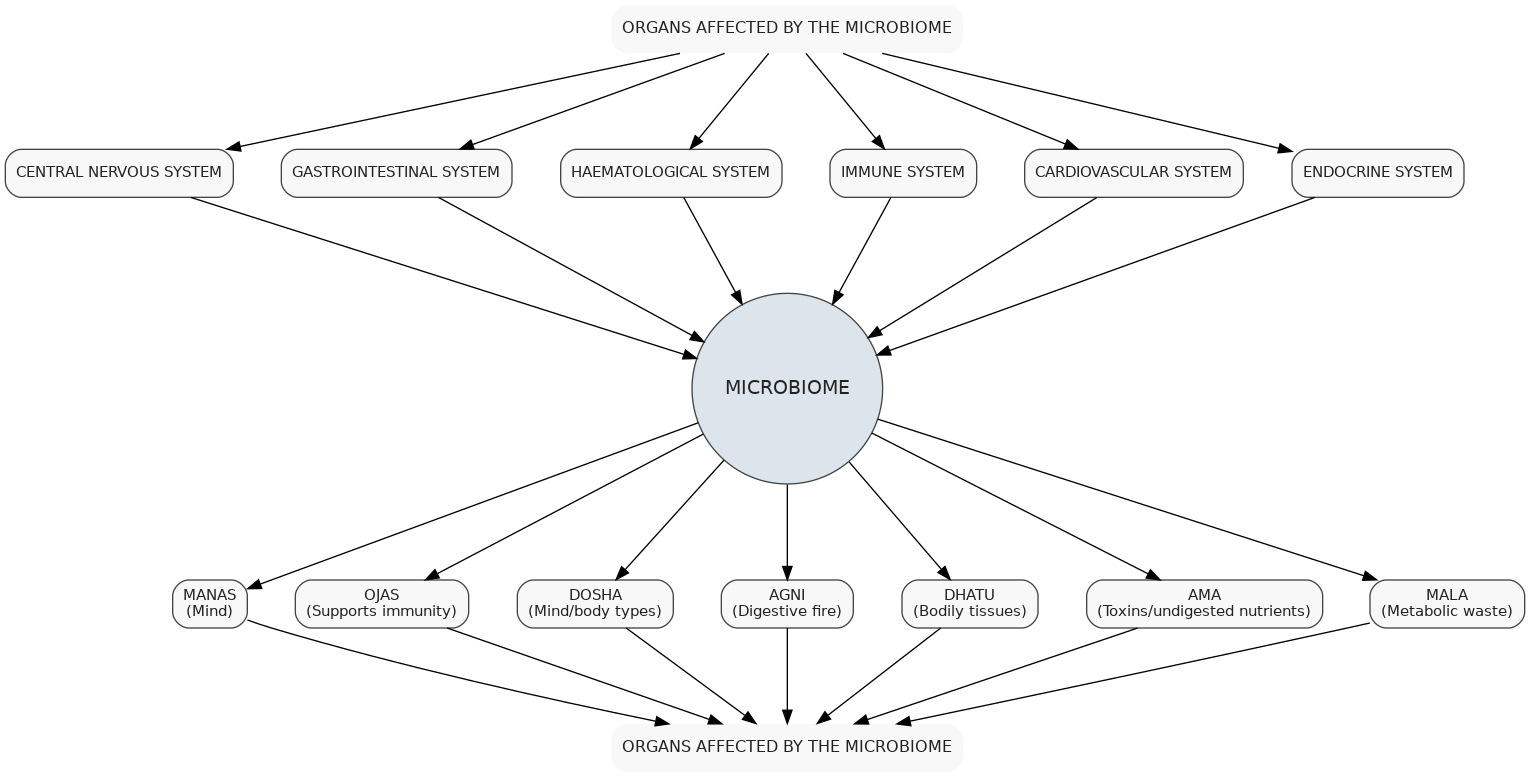
Tap the chart to open it full size.
Source for scientific background: Wallace RK. The Microbiome in Health and Disease from the Perspective of Modern Medicine and Ayurveda. Medicina 2020;56:462. Read the full paper on NIH »